
Better digital healthcare begins with a better-connected organisation
Healthcare digital transformation is not simply the introduction of more technology.
It requires patients, clinicians, administrators, operational teams, information and digital platforms to work as one connected system.
Our approach to healthcare transformation
Play overview
Technology can improve healthcare. Only connected transformation makes it work.
Patients increasingly expect simple, responsive and connected access to healthcare services.
Clinical and administrative teams need systems that reduce unnecessary friction rather than adding to it.
Leaders must improve efficiency, resilience and visibility while protecting safety, confidentiality and trust.
At the same time, many organisations are working across ageing platforms, fragmented processes, disconnected data and uneven digital capability.
Transformation cannot resolve these challenges through technology alone.
Healthcare organisations are being asked to transform on every front
Patients increasingly expect simple, responsive and connected access to healthcare services. Clinical and administrative teams need systems that reduce unnecessary friction rather than adding to it.
Patient journeys remain fragmented.
Patients may move between websites, telephone calls, appointments, payment processes, messages and in-person services without a coherent view of their overall journey.
Digital access is not always operationally connected.
A service may appear digital to the patient while significant manual work continues behind the scenes.
New systems are introduced without sufficient adoption.
Technology only creates value when clinicians, administrators and operational teams understand how it supports their work and are prepared to use it consistently.
Data exists without becoming useful intelligence
Healthcare organisations often hold valuable operational, patient and service information across multiple platforms.
Transformation is treated as a project rather than a capability
Implementation may conclude at go-live, while ownership, optimisation, governance and improvement remain unclear.
We transform organisations from the inside out.
Our healthcare work is structured around the DBE3 Framework™: Design, Build, Embed and Evolve.
01
Design
Transformation begins with understanding the organisation as it is today and defining how it needs to operate tomorrow.
02
Build
We design and develop digital products, platforms, experiences and operational systems that respond directly to the organisation’s transformation priorities.
03
Embed
A digital system is only successful when people understand it, trust it and use it effectively.
04
Evolve
Customer expectations change. Business priorities evolve. Technology advances. New opportunities emerge.
Connected capabilities across the healthcare transformation lifecycle.

Healthcare Digital Strategy
We help healthcare leaders translate strategic ambition into an actionable and sequenced digital transformation roadmap.

Patient Experience Design
We redesign healthcare journeys around the needs of patients and the operational teams responsible for supporting them.
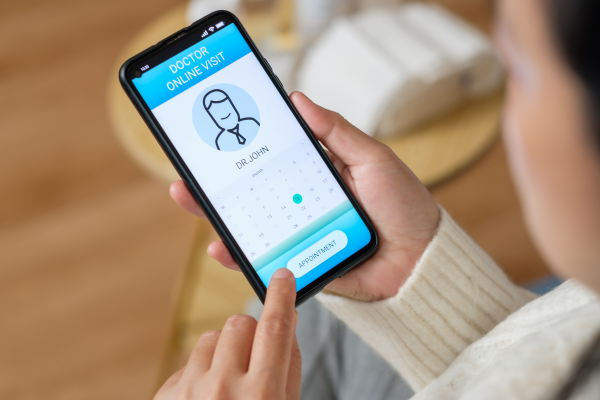
Digital Patient Access
We design connected digital entry points that make healthcare services easier to understand, access and navigate.

Platforms and Integration
We design and implement platforms that connect patient-facing experiences with the operational systems and workflows that support them.

AI and Automation
We identify practical opportunities to reduce repetitive work, improve responsiveness and support better decisions.

Adoption and Digital Capability
We help healthcare teams build the confidence, knowledge and operating capability required to sustain transformation.
PurpleCare connects the digital patient journey.
PurpleCare is Purple Crayola’s digital care operating system.
It is designed to help healthcare organisations connect patients, services, information and operational workflows across the care journey.

- Appointment requests and booking
- Reports and clinical information access
- Patient registration and account access
- Digital check-in
- Patient identification
- Online payment journeys
- Health and wellbeing information
- Patient identification
- Learning and patient education
- Patient identification
Patient-centred, not technology-led
The patient journey informs the solution. Technology supports it.
Operationally grounded
Every digital experience must reflect the teams, processes and dependencies responsible for delivering it.
Safe and responsible
Security, confidentiality, accessibility, governance and responsible use of technology are considered throughout the lifecycle
Designed for adoption
Implementation includes the communication, learning, workflow and behavioural change required to make the new system work.
Measured beyond launch
Success is assessed through adoption, experience, operational performance and sustained organisational value—not simply deployment.
Built to evolve
Healthcare organisations need platforms, governance and internal capability that can respond to changing needs over time.
Transformation grounded in real-world delivery.
Duchess International Hospital
End-to-end digital transformation across patient experience, digital platforms, operational systems and ongoing innovation.
BeyHealth Group
Portfolio-wide digital transformation strategy connecting multiple healthcare organisations through a shared digital vision.

Healthcare digital transformation: frequently asked questions.
What is healthcare digital transformation?
Healthcare digital transformation is the redesign of healthcare experiences, services, processes and operating models through the considered use of digital technology.
It extends beyond implementing software. It includes patient experience, workforce adoption, information flows, governance, service design, operational readiness and continuous improvement.
Where should a healthcare organisation begin?
The most appropriate starting point depends on the organisation’s challenge and level of clarity.
Where the problem is not yet fully understood, discovery and assessment should come first. Where priorities are already clear, the organisation may begin with a defined patient journey, platform or implementation programme.
Does Purple Crayola only implement PurpleCare?
No.
PurpleCare is Purple Crayola’s healthcare platform, but our healthcare work also includes strategy, experience design, websites, portals, integrations, automation, organisational change, learning and continuous improvement.
We can support PurpleCare implementation, bespoke platform requirements or the wider transformation surrounding existing systems.
Can Purple Crayola integrate with an existing hospital or clinical system?
Integration requirements are assessed as part of discovery and technical planning.
The appropriate approach depends on the existing system, available interfaces, data requirements, security considerations, vendor constraints and the patient journeys being enabled.
How do you support adoption?
Adoption is designed into the programme rather than added shortly before launch.
We consider stakeholder engagement, workflow impact, communications, role-based learning, operational readiness, support arrangements, governance and post-launch improvement.
Do you provide ongoing support after implementation?
Yes.
Support can include platform maintenance, service management, performance review, governance, digital operations, content, optimisation and future development.
The specific model is defined around the criticality and scope of the implemented services.
Can Purple Crayola work across a group of healthcare organisations?
Yes.
We can develop portfolio-level transformation strategies that establish shared principles, governance and enabling capabilities while preserving the specific operating context and identity of each organisation.
Digital healthcare. Designed to work.
Patient experience, digital platforms, healthcare operations and organisational change—connected to create lasting value.